
The Rule of Temperance and Its Failures
The Tenant of Wildfell HallThe novel tracks how different characters understand restraint, showing that abstinence, moderation, and self-command cannot be reduced to a single rule.
increasing Bearing strength in each event
 decreasing
Bearing strength in each eventdecreasingThe Case for Temperance

The Case for Temperance
A moral disagreement
Helen makes alcohol distasteful to her son, while others accuse her of rejecting a gift of Providence. Mr. Lawrence argues that precautions may be reasonable when a child is predisposed to excess.
Practice versus principle
The adults debating the issue are themselves accustomed to drink. Their arguments expose how easily moderation becomes a slogan when no one is asked to examine actual consequences.
Huntingdon’s False Moderation
Huntingdon’s False Moderation
Excess defended
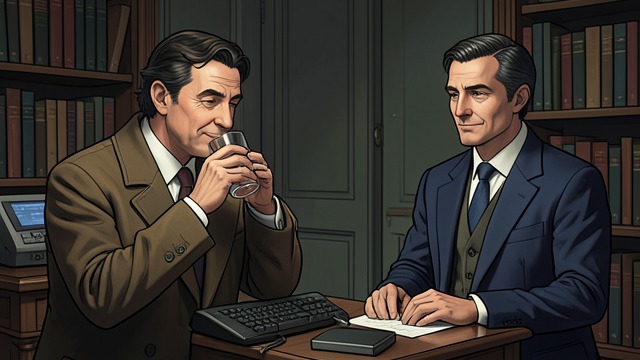
Arthur Huntingdon claims that drinking is harmless as long as a man does not become its slave. He mocks self-restraint and treats present pleasure as more real than future harm.
A doctrine serving appetite
His argument about moderation permits him to continue drinking while denying the evidence of his dependence. His companions’ approval helps disguise lack of self-command as masculine freedom.
Lowborough’s Sobriety

Lowborough’s Sobriety
Restraint after crisis
Lord Lowborough abandons gambling and grows more abstinent, striving to preserve the life he has rebuilt. His efforts contrast with Arthur Huntingdon’s casual claims that he can always stop.
Sobriety tested by betrayal
When Annabella deceives him, Lowborough suffers a renewed temptation to drink and seek oblivion. His struggle is serious because abstinence requires repeated choice, not a single declaration.
A Child’s Aversion
A Child’s Aversion
A deliberate lesson
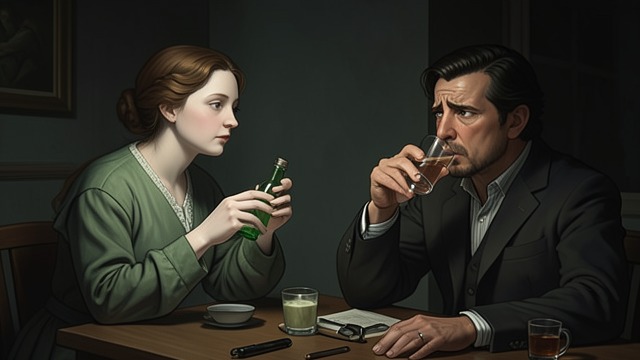
Helen uses tartar emetic to make Arthur Graham associate alcohol with sickness. Her approach is an attempt to counter what he learned from watching adults at Grassdale.
A disturbing solution
The method raises questions about parental authority and the ethics of shaping a child’s habits. Helen’s fear is understandable, but the novel lets the reader see the cost and severity of her intervention.
Temperance Too Late
Temperance Too Late
The relapse
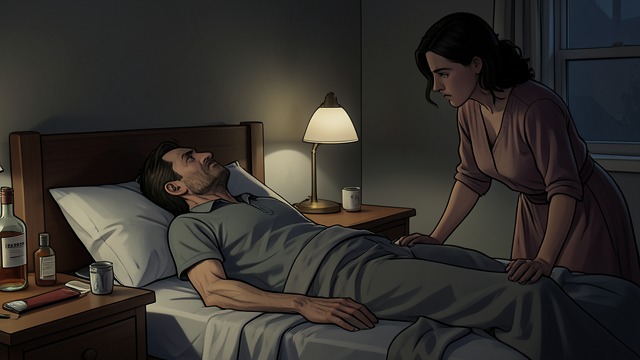
Arthur Huntingdon resumes drinking while recovering from injury, rejecting Helen’s effort to limit him. His weakened body cannot bear the excess.
Consequences without simplification
His illness and death show the physical cost of addiction, while his last fear concerns the moral consequences he long denied. The novel distinguishes sympathy for suffering from denial of responsibility.
At the Markham gathering, autumn 1827
During the early marriage
After his marriage to Annabella
After Helen escapes to Wildfell Hall
Arthur Huntingdon’s final illness
